From storyboard to finished 3D animation
How does an initial idea turn into a finished 3D animation? Especially with complex products or technical processes, it is often difficult to visualize the final video before a project begins.
That is why we start working with visual storyboards early on. They help us with planning, but above all, they give our clients a much better idea of what the final video could look like.
This way, decisions do not have to be made based on descriptions alone. Camera angles, scenes, and sequences become visible early on and can be coordinated together before the actual 3D production begins.
Making an idea visible
For this project, we visualized parts of the storyboard using AI. Instead of describing individual scenes solely with text or simple sketches, we were able to show what certain shots might look like.
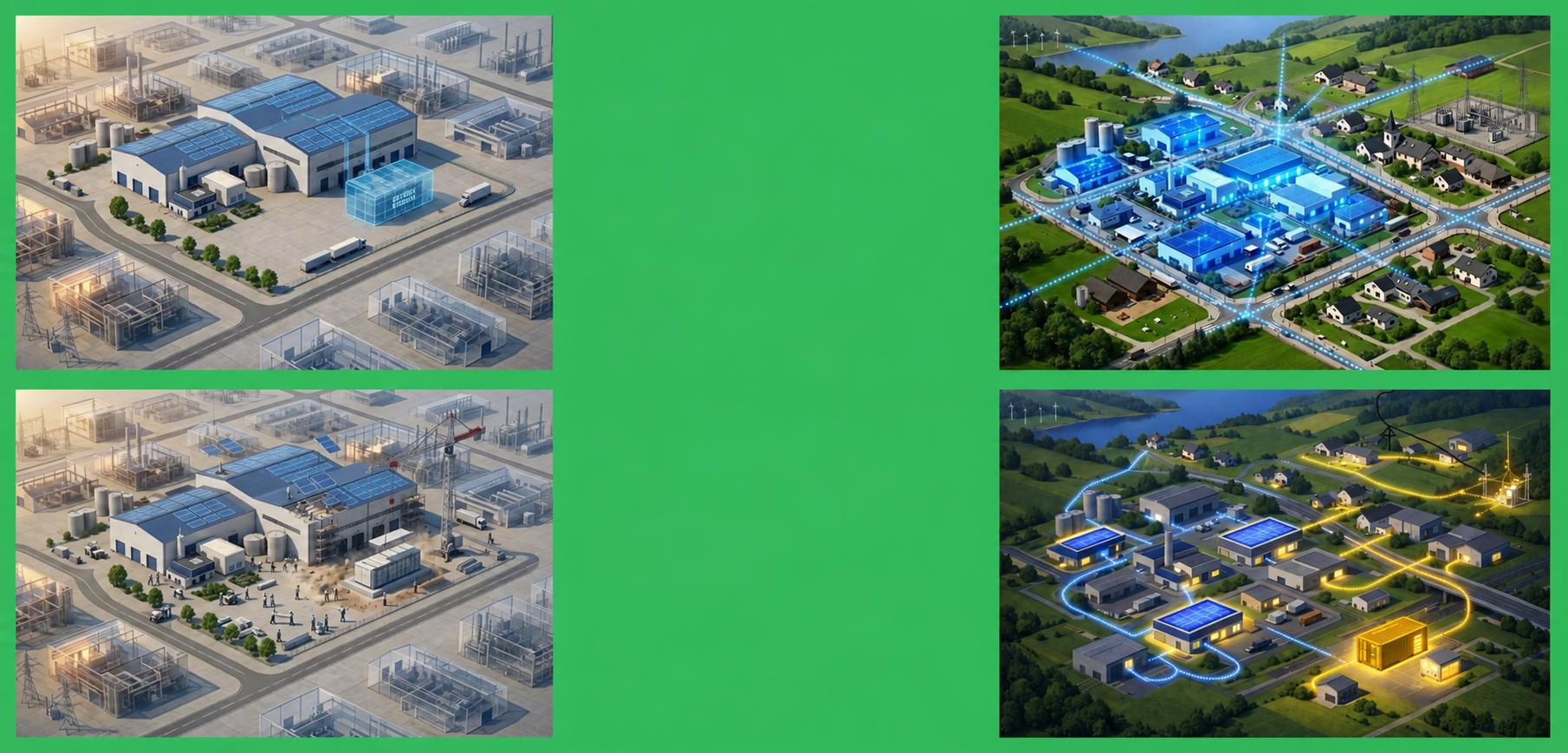
It is important to note: such a storyboard is not a finished end product. Details, materials, lighting, or individual objects may look different later on.
It serves as a visual guideline. This makes it easy to see early on whether a scene is understandable, whether the perspective works, and whether the planned presentation suits the product. Change requests can thus be discussed before a lot of time has been invested in the actual implementation.
From storyboard to finished animation
The comparison with the finished video shows how close such an early visualization can already get to the final result:
Many of the fundamental ideas from the storyboard are reflected in the final animation. In 3D production, they are then precisely implemented and further developed with the right 3D models, materials, animations, camera movements, and lighting.
For our clients, this primarily means more security in the production process: there is a shared visual concept early on that both sides can use as a guide.
Demo scenes before the project starts
Short demo scenes offer a similar possibility. Especially when it is not yet clear how a specific product might look as an animation, we create an initial visual concept for selected projects before production begins.
With tools like Google Flow, for example, you can use a product image to test what a certain environment, staging, or camera movement could look like.
Such a demo scene is also deliberately not a finished video. Prompts must be adjusted, variants tested, and clips partially edited and post-processed. However, the effort is significantly lower than building a complete 3D scene from scratch.
For interested parties, this makes the potential of their own product and the direction a future 3D animation could take more tangible even before actual production begins.
Visualize first, produce later
Whether it's a storyboard or a demo scene, the main advantage is making ideas visible as early as possible.
For our clients, this means fewer abstract explanations, a better sense of the final result, and the opportunity to provide feedback early on. At the same time, it creates a clear foundation for us to move forward with production.
The storyboard sets the direction, while the actual 3D production turns it into the finished video.


Contact
or directly via e-mail to: office@immersive-animation.com
