From 3D to interactive applications without programming
3D data is available in many companies today. In CAD systems, as product models, or from scans and simulations.
What is often missing, however, is an easy way to process this data in such a way that it is really understandable for customers, sales or training.
The real problem: But 3D is not usable there
Many teams face the same challenge: 3D data exists, but its use remains limited. The reason for this is rarely the technology itself, but the lack of know-how to develop interactive applications from it.
Classic 3D engines are powerful, but often come with a steep learning curve:
- Programming skills are required
- Development times are long
- Adjustments are complex
As a result, potential remains untapped.
New approaches: interactivity without programming
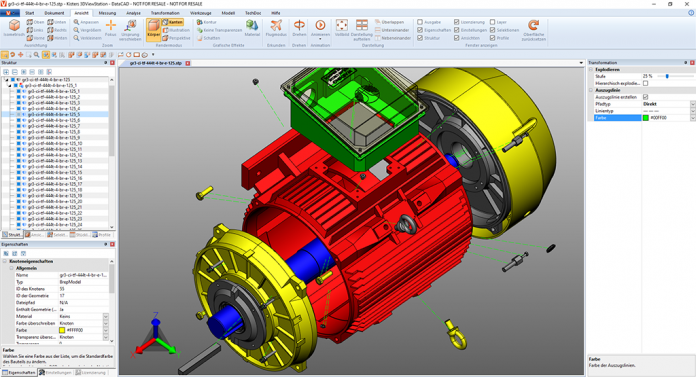
This is exactly where new tools and features come in. They make it possible to reuse existing 3D data directly and create interactive applications from them without in-depth programming knowledge.
The focus is shifting:
- Away from technical implementation
- Towards content, story, and user experience
In concrete terms, this means:
- Scenes can be visually configured
- Interactions can be defined without code
- Content can be tested and adapted more quickly
In this way, applications are created in a shorter period of time that would have required significantly more resources in the past.
What is actually possible with this
The possible uses are varied, especially where complex content must be presented in an understandable way.
1. Quick prototyping
Ideas can be visualized and tested early on.
Even before a product is finally developed.
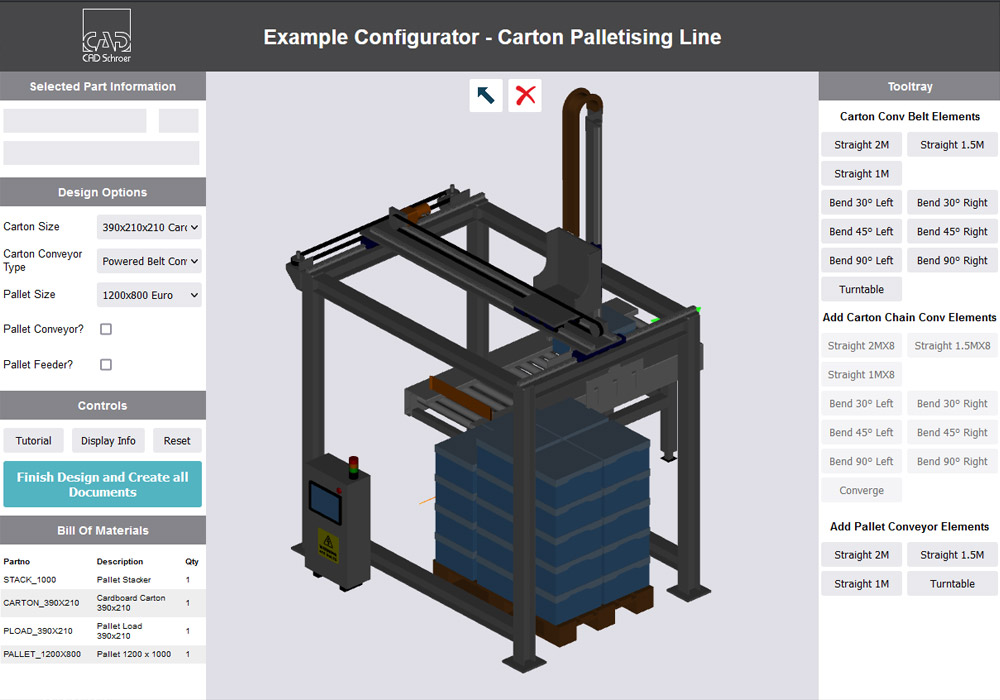
2. Interactive product configurators
Customers can directly experience, adapt and compare variants.
3. 3D training applications
Processes, machines or procedures can be explained visually and interactively.
4. Sales and marketing tools
Complex products are not only shown, but also brought to life.
Why this is relevant for companies
Access to 3D is becoming easier and, as a result, expectations are also changing. Instead of static content, interactive experiences are increasingly expected.
This has a direct impact on:
- Sales: present products in a more understandable way
- Marketing: attention through experiences instead of images
- Training: Deliver content faster and anchor it better
In short:
Complexity remains, but its presentation becomes significantly easier.
Our look at it
We also see this development in our projects. Regardless of whether it is a technical product, configurator or process presentation: In the end, it is always a matter of preparing content in such a way that it is intuitively understandable.
New tools are accelerating this journey, but the real challenge remains:
- Develop the right visual story
Because technology alone doesn't explain anything. The way content is shown makes the difference.
More information on the topic: https://unity.com/de/products/unity-studio


Contact
or directly via e-mail to: office@immersive-animation.com
